Precast concrete is the construction method we use for the structural shell of our residential and mixed-use builds. Walls, structural panels and stairs are cast off-site at a controlled-conditions facility, cured to dimensional specification, and delivered to the plot ready to install, typically in days, not weeks.
~2
Days per villa to erect on plot
~45%
Complete by the end of Month 2
~7
Monsoon months the method survives
The approach is widely used in northern Europe, Singapore and Japan, and increasingly in the higher-spec residential and hospitality builds across Southeast Asia. We adopted it because the construction reality of Phuket (a long monsoon, a deep range of trade quality across subcontractors, and an industry that defaults to cast-in-place concrete on site) makes precast the single most reliable way to keep an ambitious build on its programme.
This page is the public version of the briefing we issue to our owners. It explains why we work this way, what it means for programme and quality, and what the typical month-by-month build looks like.
Each of the four advantages below is a problem precast solves on a Phuket build. Together they are why a project running precast typically clears its first 45% of completion before a cast-in-place equivalent has its slabs cured.
/ 01 · WEATHER
~7Monsoon months
Weather-resilient progress
Walls and structural panels are produced indoors at the precast facility. Rain has minimal impact on the critical path. Components arrive complete and are erected in days, not weeks.
/ 02 · BATCHING
04Villas per batch
Predictable batching
Batching lets us guarantee quality control across each set of villas, rotate site crews efficiently, and lock in delivery slots from the precast factory well in advance.
/ 03 · PROGRESS
45%By Month 2
Rapid visible progress
Once a batch begins, structure rises quickly. By the end of month two, a typical villa is already nearing 50% complete, a pace traditional cast-in-place cannot match.
/ 04 · FINISH
±3mmTolerance
Higher finish quality
Factory-cast walls cure under controlled conditions, producing dimensional consistency, cleaner edges, and a stronger substrate for the architectural finishes we apply on site.
On site
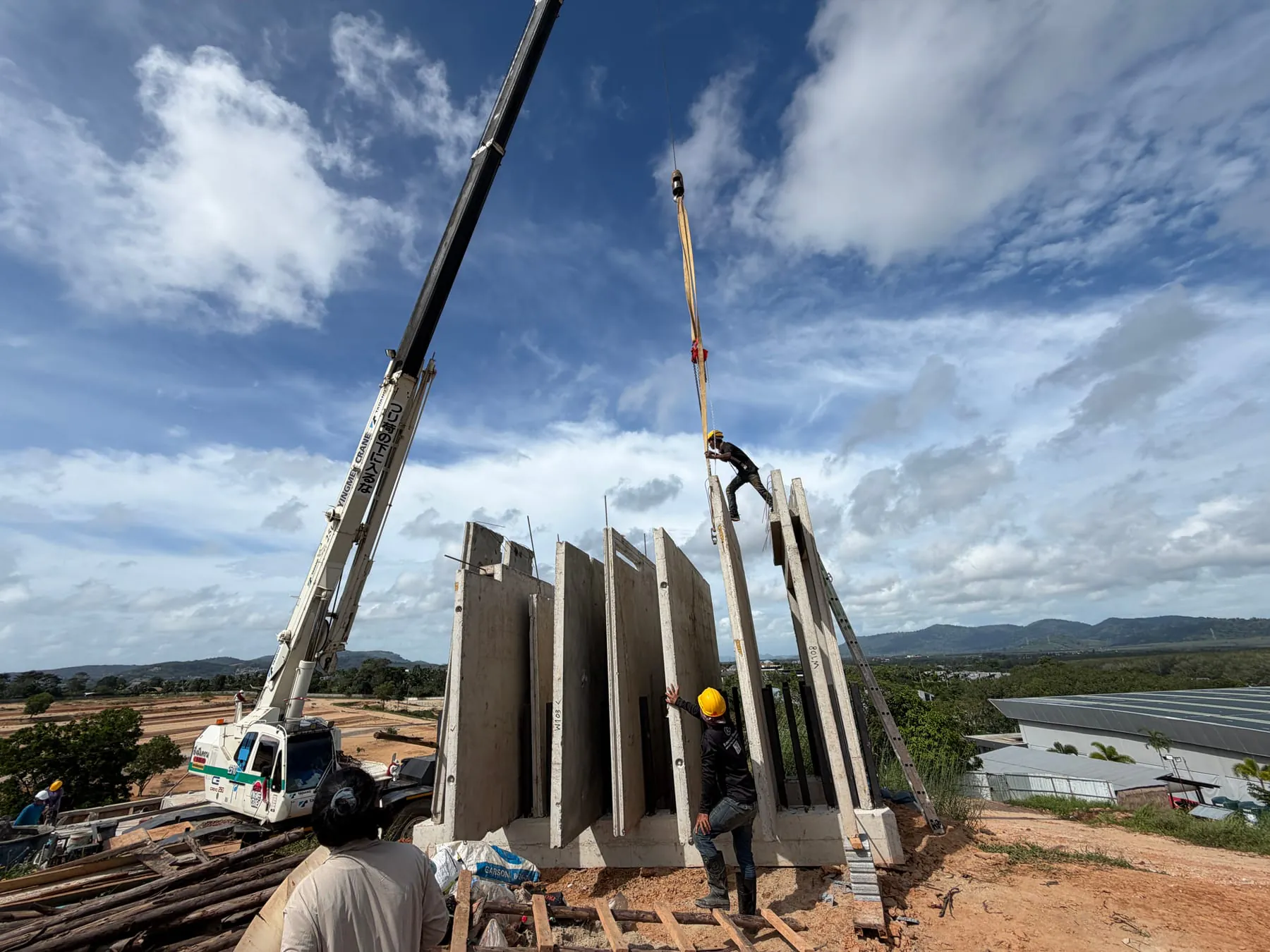
Erection, in progress.
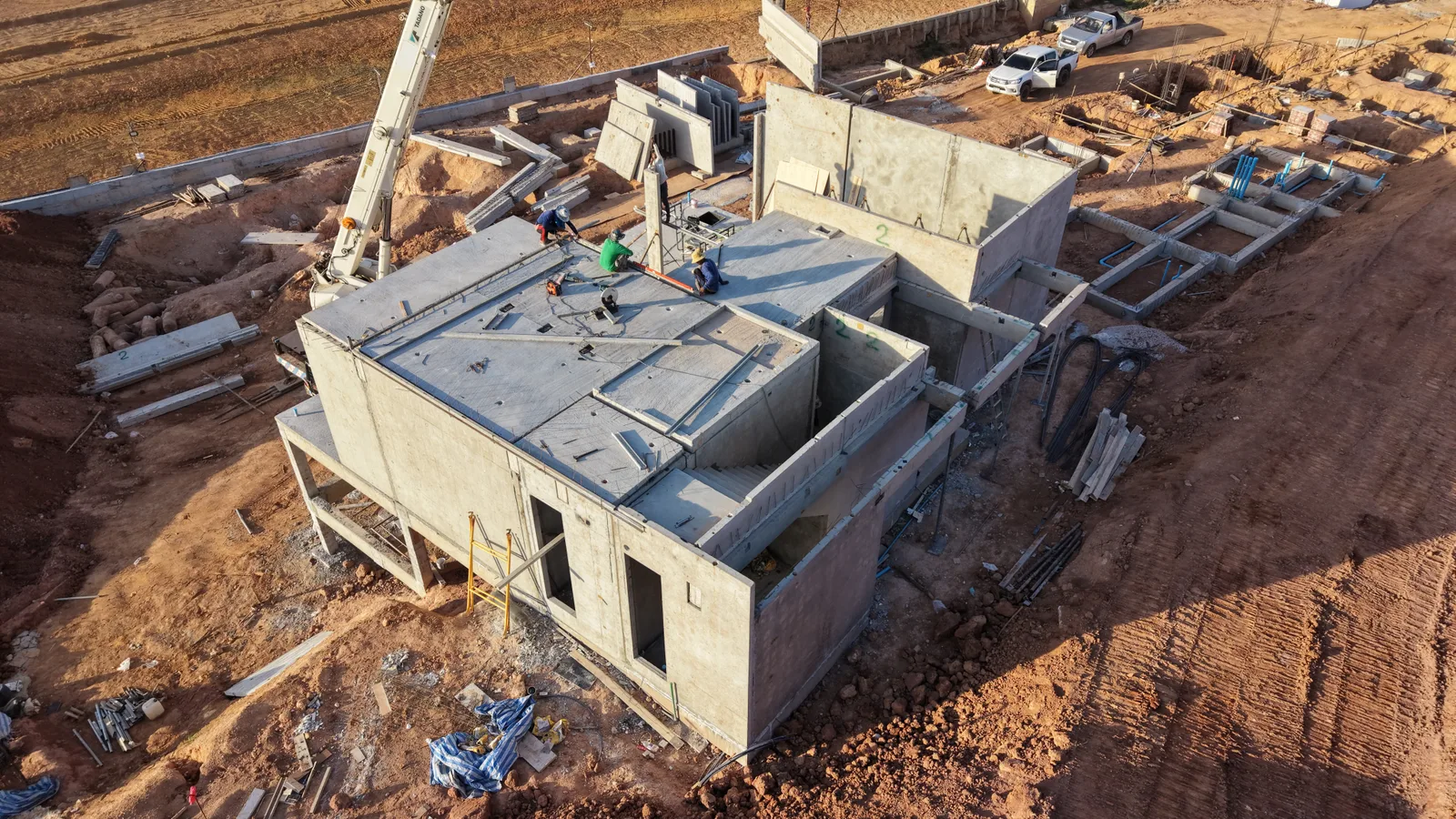
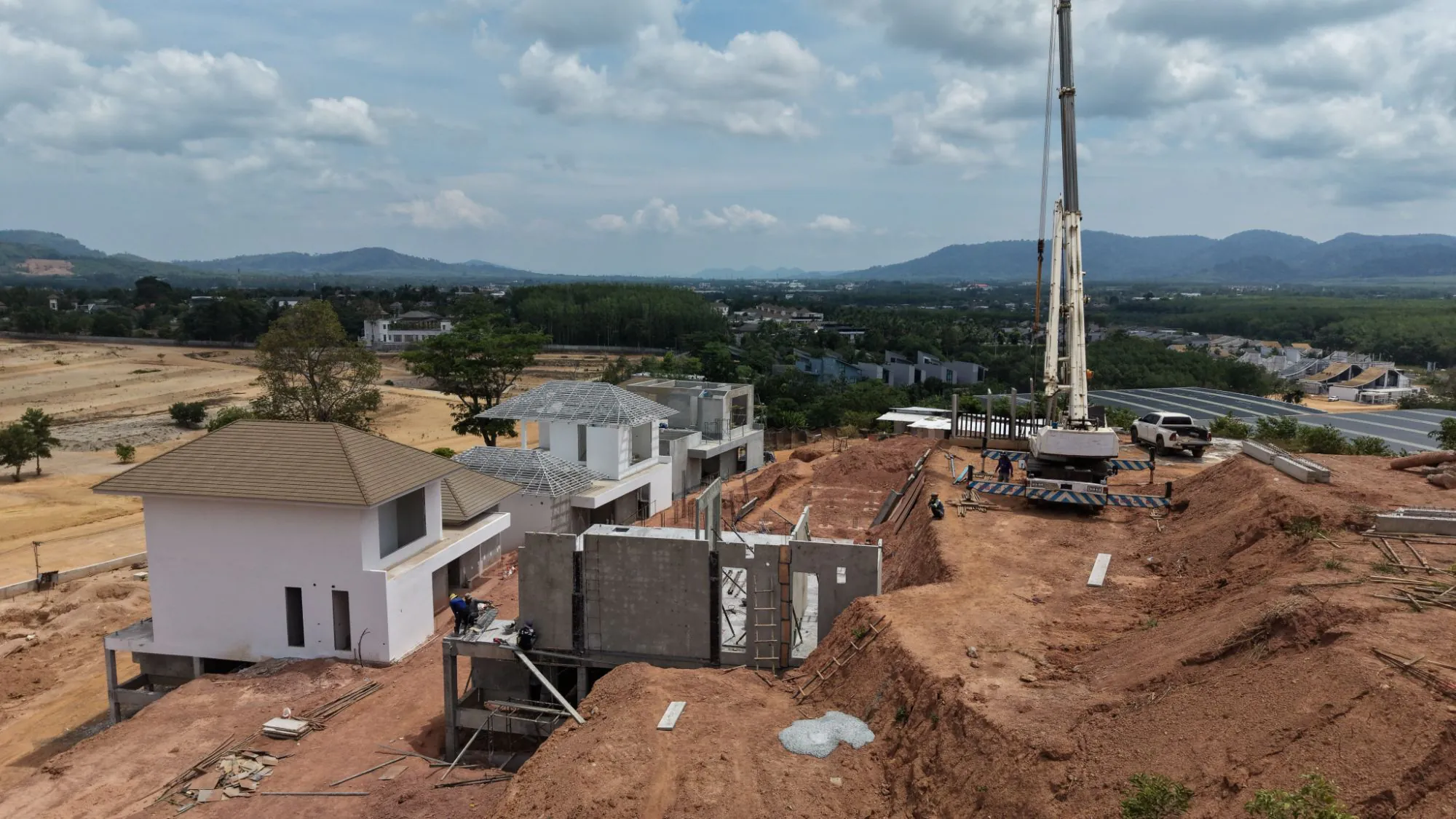
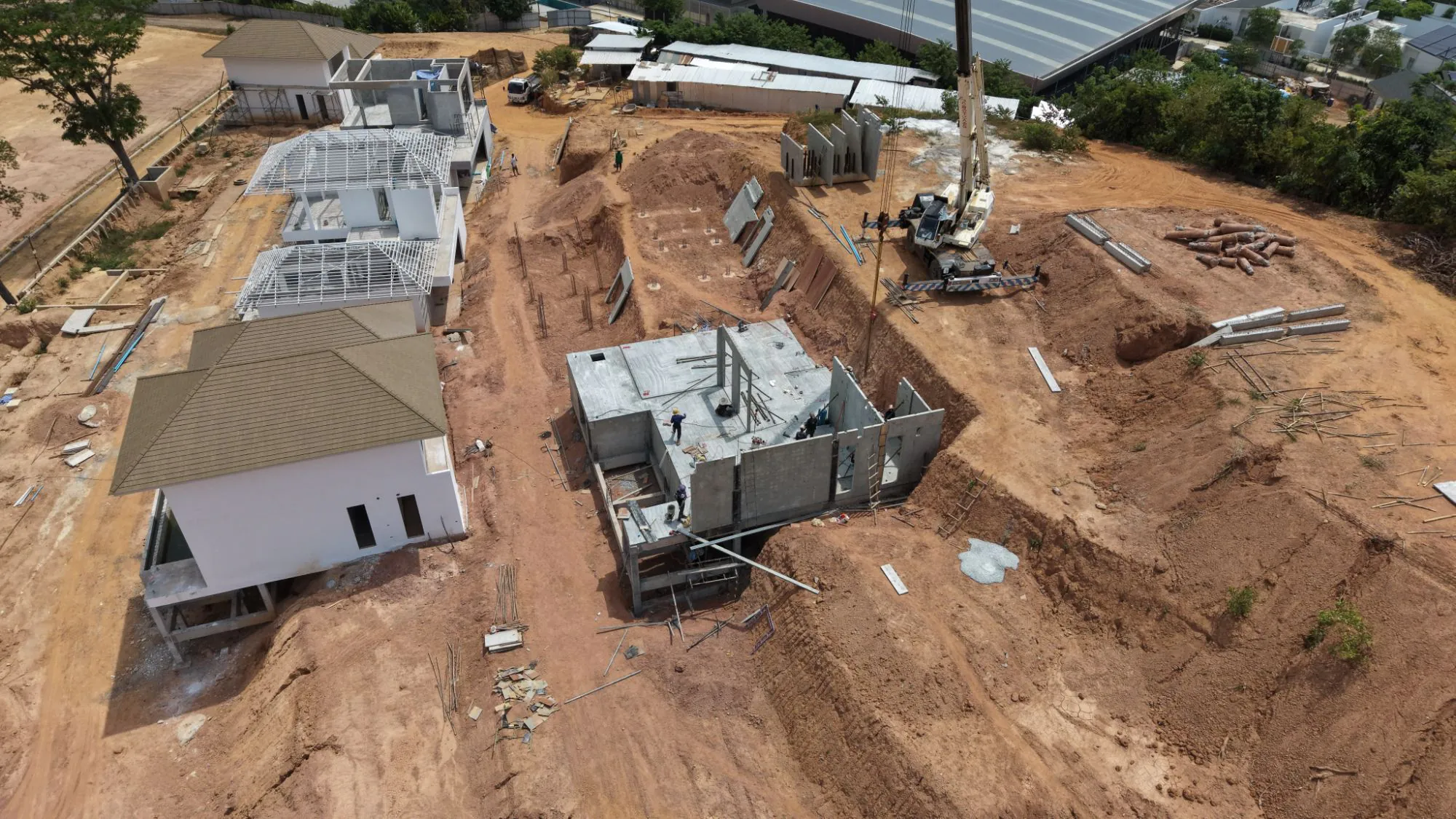
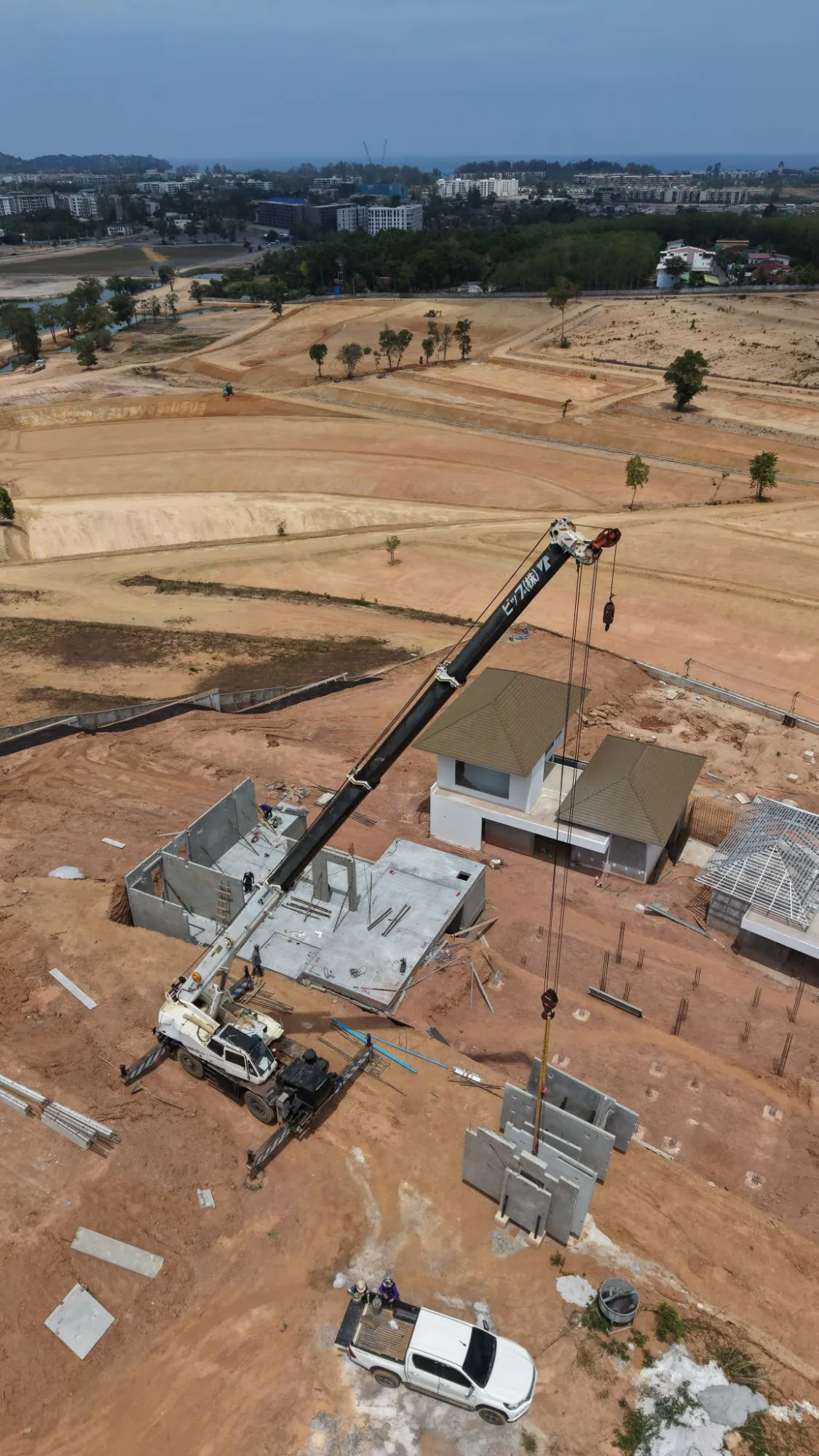
Drone overflight of an active KAHLI Hillside Villas batch, precast wall and stair panels craned into position alongside completed structural roofing.
Active erectionHillside batch · 2026
Adjacent stagesRoof + walls
Panels stagedReady to lift
Erection in progressWorkers + crane
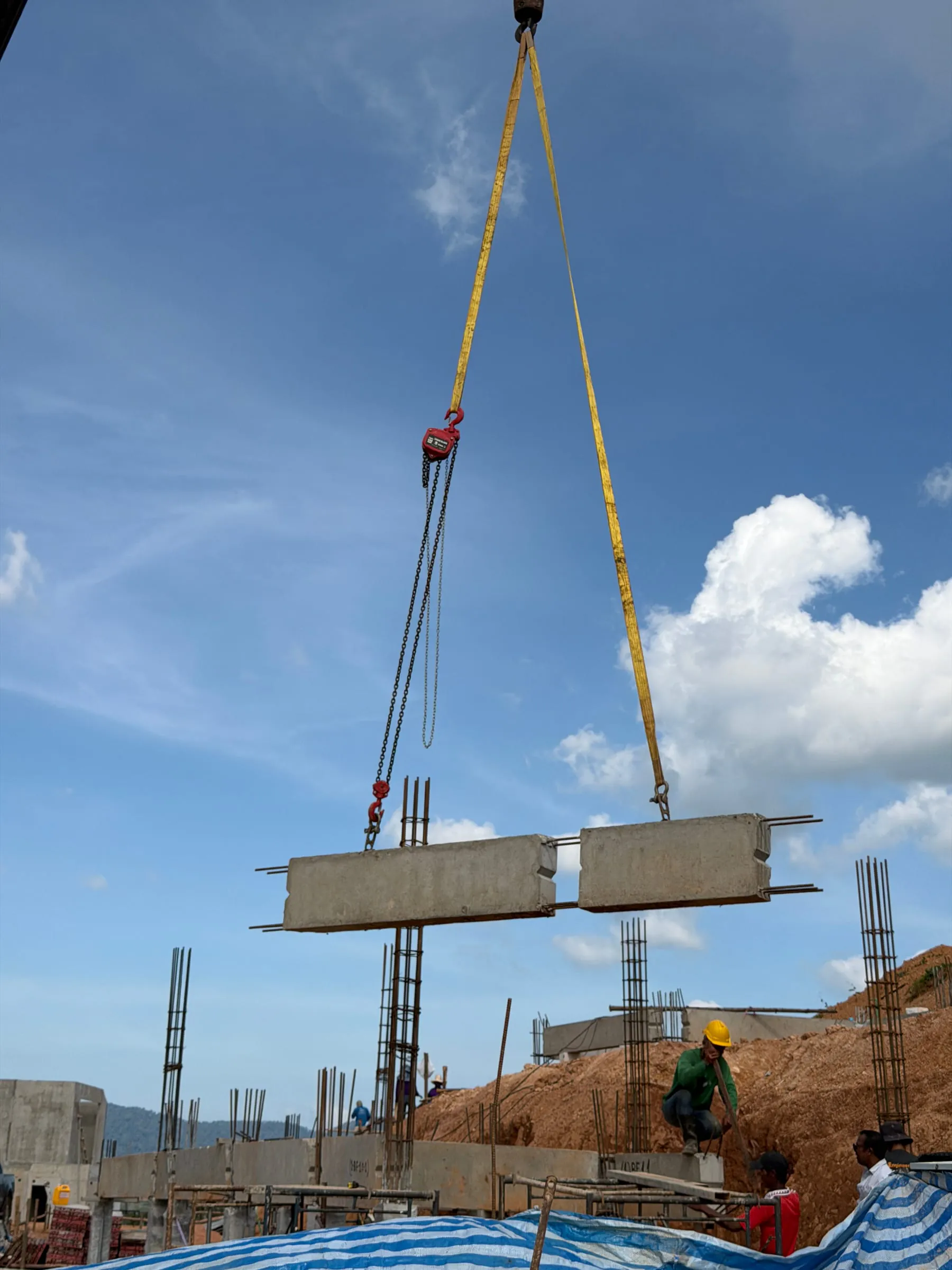
Beam liftTo the column heads
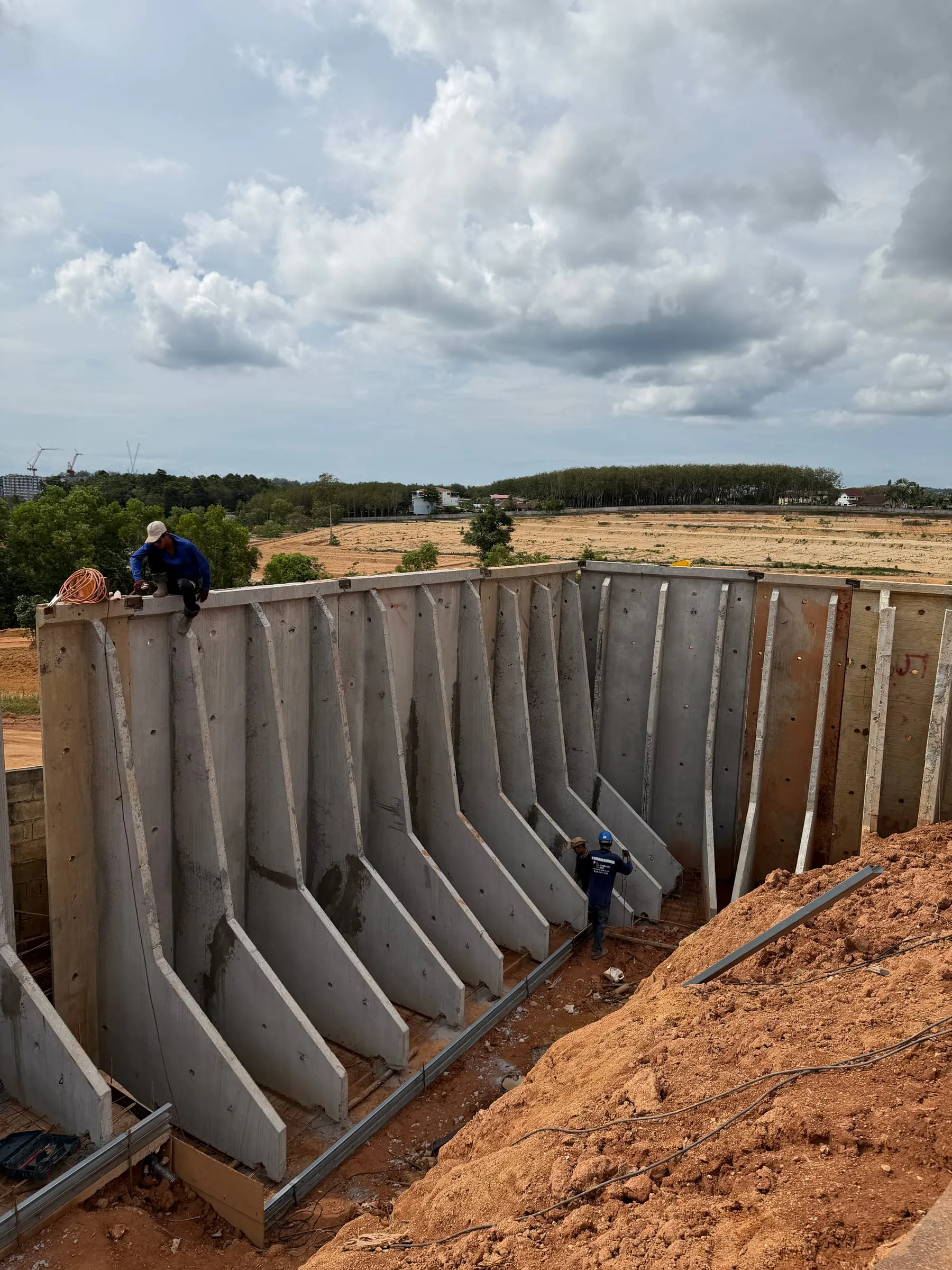
Retaining wallCured + assembled
The nine stages
From plot to handover.
The chart below shows the typical month-by-month progress of a single villa from the day construction begins on the plot. The schedule includes generous contingency for weather and supply, it represents the longest-case build, not the shortest.
/ 01
Piling & pile caps
Deep-driven piles establish the foundation footprint and load-bearing pile caps. The first physical step on your plot.
Month 1
/ 02
Ground beams & foundation
Reinforced ground beams tie the piles together. Soil treatment for termite and pest protection is applied before slabs are poured.
Month 1–2
/ 03
Walls, stairs & main structure
Precast walls and stairs are delivered and craned into position. This is the stage that drives the dramatic month-two progress jump.
Month 2–3
/ 04
MEP first-fix
First-fix piping, cables, electrical conduit and drainage are installed within the structural shell. Largely internal, visible site progress slows.
Month 3–4
/ 05
Roof structure & tiles
Roof framing, insulation and tiling complete the weathertight envelope. Once the roof is on, internal finishing accelerates.
Month 4–5
/ 06
Tiles, ceiling & woodwork
Interior tiling, ceiling installation, and Japandi-inspired joinery and woodwork begin transforming the structure into a home.
Month 5–6
/ 07
Windows & doors
Glazing and door installation complete the building envelope and bring natural light and the mountain views into the interior.
Month 6–7
/ 08
Final fit-out
Final finishes, architectural detailing, built-in cabinetry and the loose furniture package installed and styled.
Month 7–8
/ 09
Handover
Snagging walk-through, final inspection, owner orientation, and the formal handover of keys.
Month 8
The numbers
A schedule built to deliver.
The 15-month contract window for a precast development like KAHLI's hillside is generous by design. It absorbs weather, supply and sequencing variability across the entire 19-villa programme, so any individual handover date stays predictable and protected.
PROJECT-WIDE
15months
The contract window for a complete batched programme. Absorbs cross-site sequencing, rain delays, and supply variability.
PER VILLA
~8months
Once a plot's batch begins, the villa progresses from piling to handover within roughly eight months, including built-in contingency.
BY MONTH 2
~45%complete
Foundations and structural panels in place. Weather has had almost no opportunity to delay the critical path.
BATCH SIZE
04villas
Villas built in batches of four, sharing crane access, crew rotation and factory delivery slots, staggered across the 19-villa hillside.
What this means for owners
Six things to know.
The contract window is project-wide. The 15-month window covers all villas across multiple precast batches, not the time required to build any single villa.
An individual villa takes around 8 months. Once the plot's batch begins, the villa progresses from piling to handover within that window, including built-in contingency.
Plots may sit briefly. It is normal for an individual plot to appear inactive for the first 4–5 months while site infrastructure and earlier batches progress.
Then progress is rapid. Once a batch begins, structural progress is dramatic, typically reaching 45% completion by the end of Month 2.
Rain has limited impact. Because precast components are factory-produced indoors, monsoon weather affects site finishing far less than traditional cast-in-place methods.
The figures are conservative. The numbers throughout this page represent the longest-case build. Most villas complete inside or ahead of these timelines.
See it in practice
KAHLI Hillside Villas.
Nineteen villas under construction on a single hillside in Cherngtalay, every typology delivered on the precast programme described on this page.