01
Recurring black mould
Mould that comes back within weeks of being cleaned, in the same spots. Usually a moisture source behind the wall: A/C condensate, slab leak, or roof ingress. Bleaching only treats the surface.
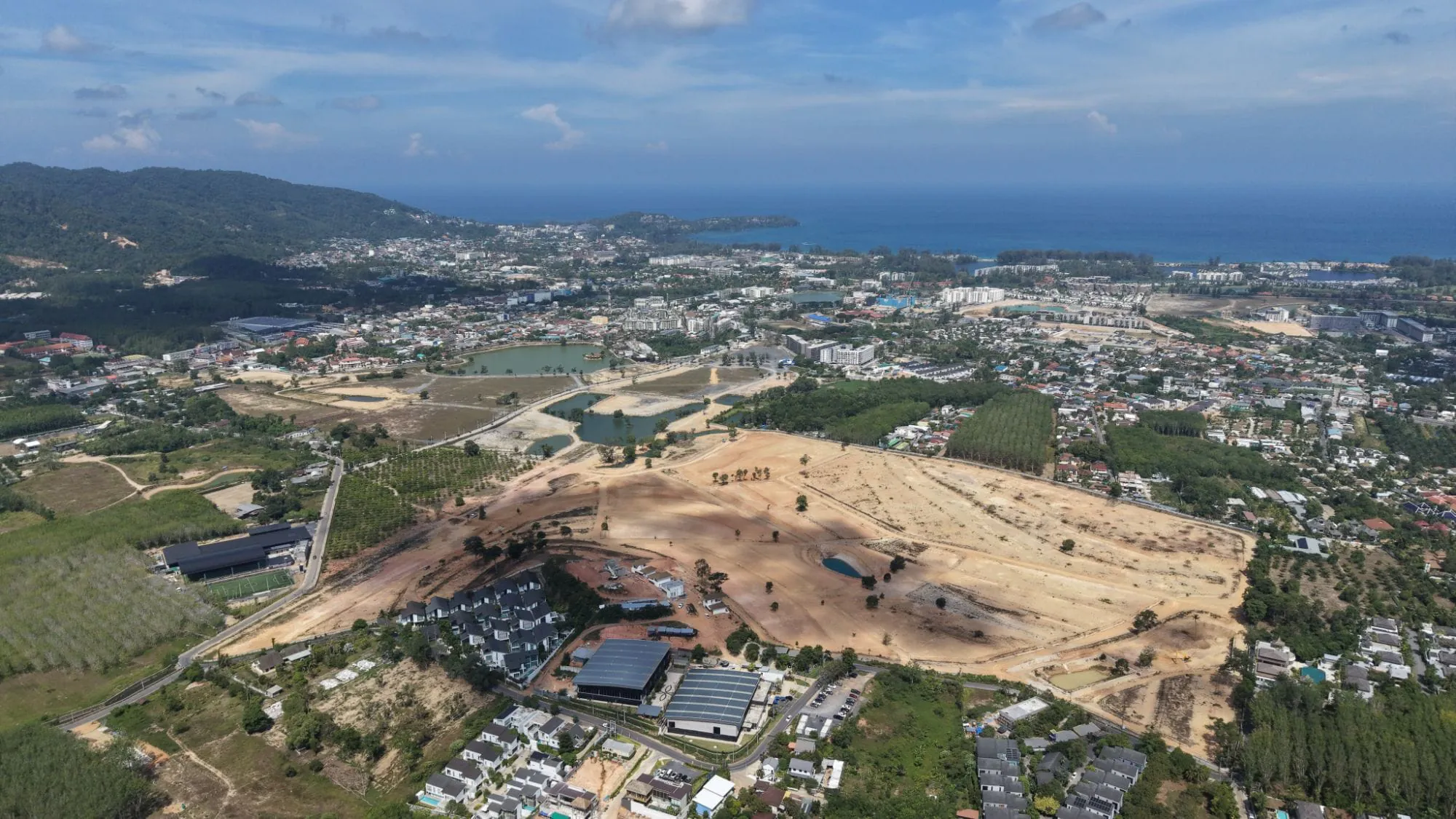
Phuket is one of the most active luxury property markets in Southeast Asia. It is also one of the most variable. A building that looks well-finished can still have substandard concrete cover, unearthed circuits, undersized drainage, or a foundation settling on fill it should never have sat on. The buyers and owners most exposed to these issues are the ones with the least visibility into how Phuket construction actually works.
The realities of building in Phuket are not optional context. A seven-month monsoon punishes anything that wasn't designed for it. Hillside sites carry geotechnical and drainage risk the average buyer never sees. The trade quality across local sub-contractors varies enormously. Permits and as-built drawings often disagree. And the gap between what was sold and what was actually built can be small or it can be substantial. None of this is uniquely Phuket, but the combination is. A property inspection here needs a builder's eye, not a generalist's checklist.
Constructive: Build is a working construction studio in Cherngtalay. We design, engineer, project-manage and build properties in Phuket. We inspect properties here because we already know what gets built poorly and where. When we walk a property we know which sub-contractors typically run which trades, which finishes are short-life in the climate, and which structural shortcuts hide behind a finished wall. We are, in effect, the studio that would have built it correctly the first time.
We cover Phuket and the Andaman coast (Phang Nga, Krabi, and into Surat Thani for larger commissions). Reports are delivered in English by default, and in Thai, Russian or Mandarin on request, so they can be used directly in legal due diligence packages alongside Chanote land title checks, building permit verification and the rest of the property-purchase paperwork.
Pre-purchase · Post-handover · Diagnostic
Each inspection is scoped to the situation. The systems we walk and the questions we answer are different for a pre-purchase due diligence than they are for a post-handover punch list or a diagnostic on a problem property.
If your property shows any of the symptoms below, the underlying problem is usually structural, building-envelope or mechanical, not cosmetic. These are the issues owners describe to us most often before commissioning a diagnostic inspection.
Mould that comes back within weeks of being cleaned, in the same spots. Usually a moisture source behind the wall: A/C condensate, slab leak, or roof ingress. Bleaching only treats the surface.
A villa that smells stale after a long weekend away has a humidity and ventilation problem. Common in builds without cross-ventilation, under-sized HRV, or A/C drainage that pools rather than drains.
Flashing detail is wrong or the seal is failing. The leak path is intermittent because it depends on wind direction and rain intensity, which is why owners dismiss it for years before it gets worse.
Settlement is ongoing. The crack is mapping live structural movement, not surface drying. Surface filler will not hold it. Distinguishing cosmetic from structural is part of every inspection.
Frame is racking with humidity. Sometimes settlement-driven, sometimes substandard hardwood that wasn't kiln-dried before installation. Easy to dismiss, expensive once the frame distorts.
Loose neutral, overloaded common bus, or earth fault somewhere upstream of where the problem appears. Common in older Phuket installations and in builds where electrical was the last trade to leave site.
Pool shell hairline crack, return-line leak, or overflow channel mis-set. Chemicals usually go out of balance at the same time. Hard to find without dye testing and pressure isolation.
Condensate drain blocked, drain slope wrong, or the unit installed below the drain line. Slow damage to plaster and timber that becomes expensive once visible inside finished surfaces.
When weather isn't the cause, the source is internal: plumbing leak in the slab above, drainage failure, or A/C condensate. Needs moisture meter and thermal imaging to trace properly.
Bedding mortar has failed. The tile will come loose eventually; the larger question is whether the underlying waterproofing also failed and is letting water through to the structure below.
Seeing one or more of these?
The inspection works through the building the way it was built: structure first, then services, then finishes. Findings are categorised by severity (critical, advisory, cosmetic) so the report is actionable. Where remediation is needed, we cost it where we can.
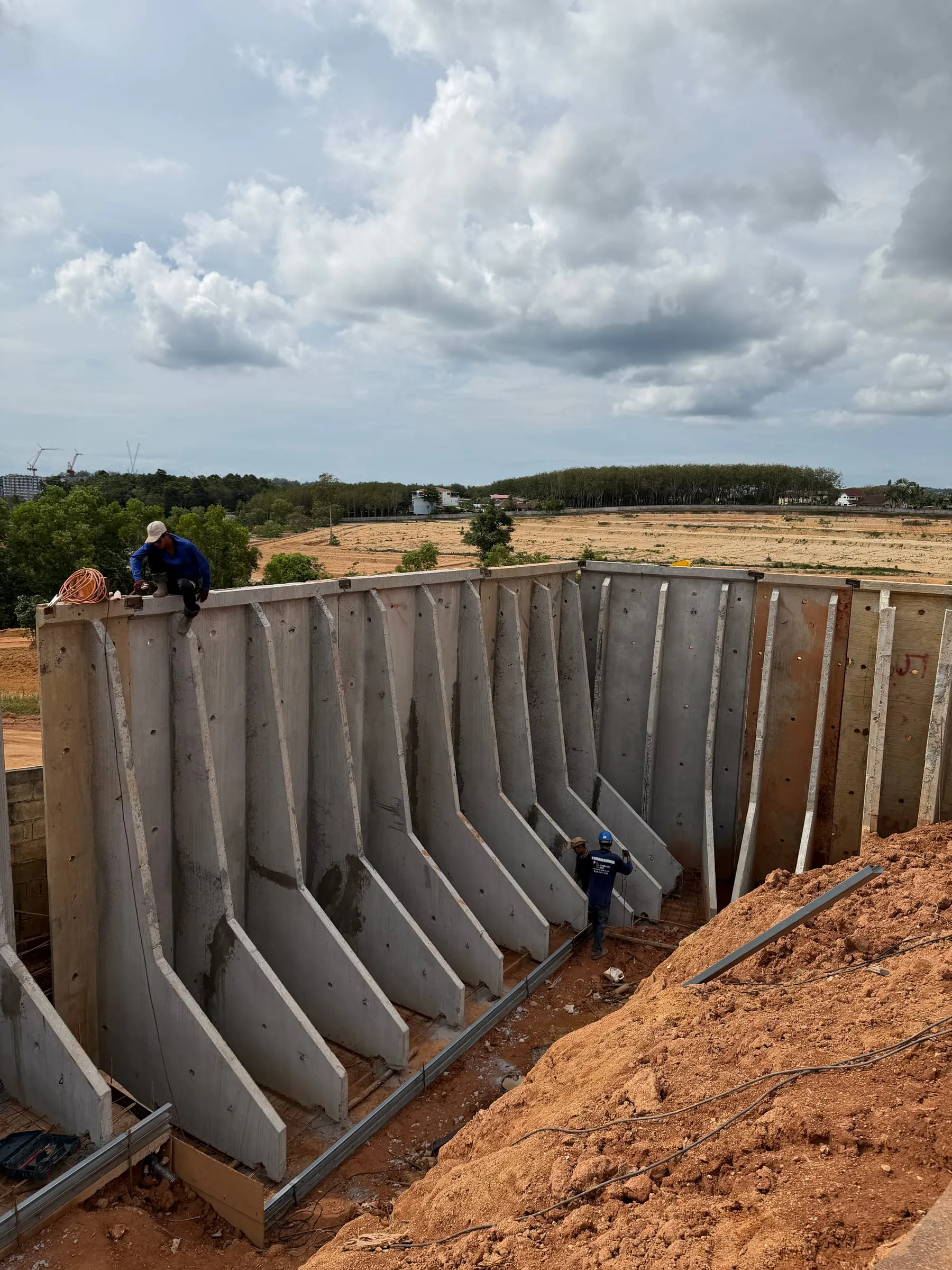
Foundations, slabs, beams, columns, retaining walls. The first system on every walk-through, because everything else depends on it.
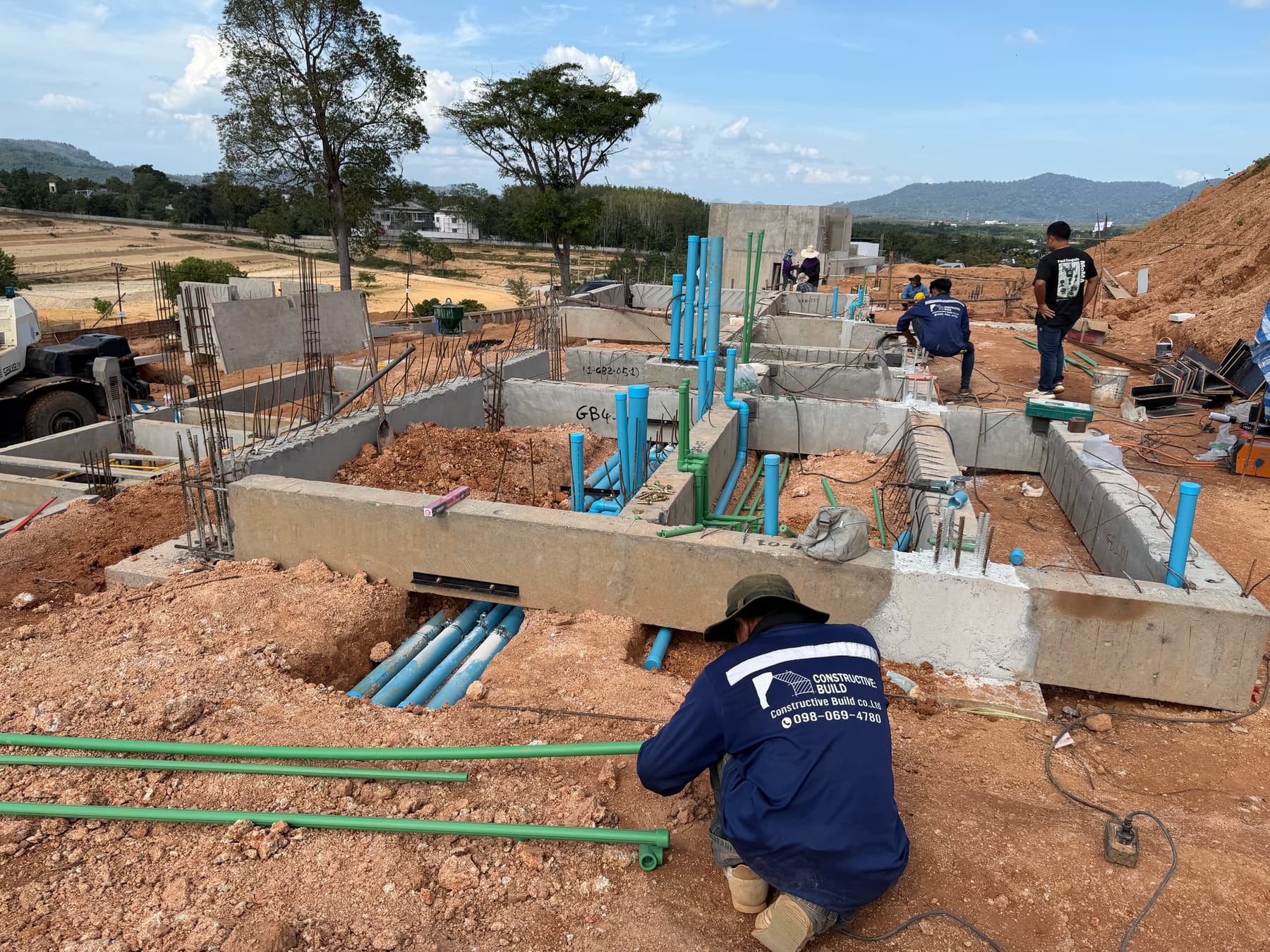
First-fix services are mostly invisible once the walls close. We open access where we have to, and read the rest from drawings, pressure tests and instrument readings.
A non-exhaustive list of the issues that recur on Phuket properties. These are the ones a generalist surveyor will miss and that a buyer will inherit if no one looks for them.
Foundations laid on imported earth that wasn't compacted or tested. Settlement appears in years 2–5 and shows up as recurring cracks and uneven floors.
Reinforcement set too close to the surface. Carbonation reaches the bars early in the life of the building. Rust expansion lifts the render off monsoon-side walls.
Gutters, downpipes and surface drainage that work fine in November and overflow in September. Often the simplest fix in the inspection report.
Older properties (and some newer ones) with no working earth bond. RCDs sometimes installed but not actually wired through.
Tank size meets the spec; the leach field doesn't. Symptoms appear in monsoon when the water table rises and the soakaway stops absorbing.
Pavilions, granny flats and extensions added without permit. Implications for resale value, insurance and legal compliance.
Symptoms: poor circulation, algae in corners, chemicals that won't balance, heaters cycling more than they should.
Conduit and pipes embedded in slabs that hadn't reached design strength. Damage shows up years later, after the warranty is gone.
Common in sub-contracted units installed under cost pressure. Slow damage that is expensive to remediate by the time it becomes visible.
What was sold isn't what was actually built. Sometimes a few square metres; sometimes a whole pavilion or pool deck encroaching on a setback.
The studio runs architecture, engineering, project management and construction in-house. The same disciplines that inspect a property are the disciplines that would have built it. We don't outsource the structural check to an external engineer, the electrical check to a generic surveyor and the plumbing check to a sub. One inspection team. One report. One accountable principal.
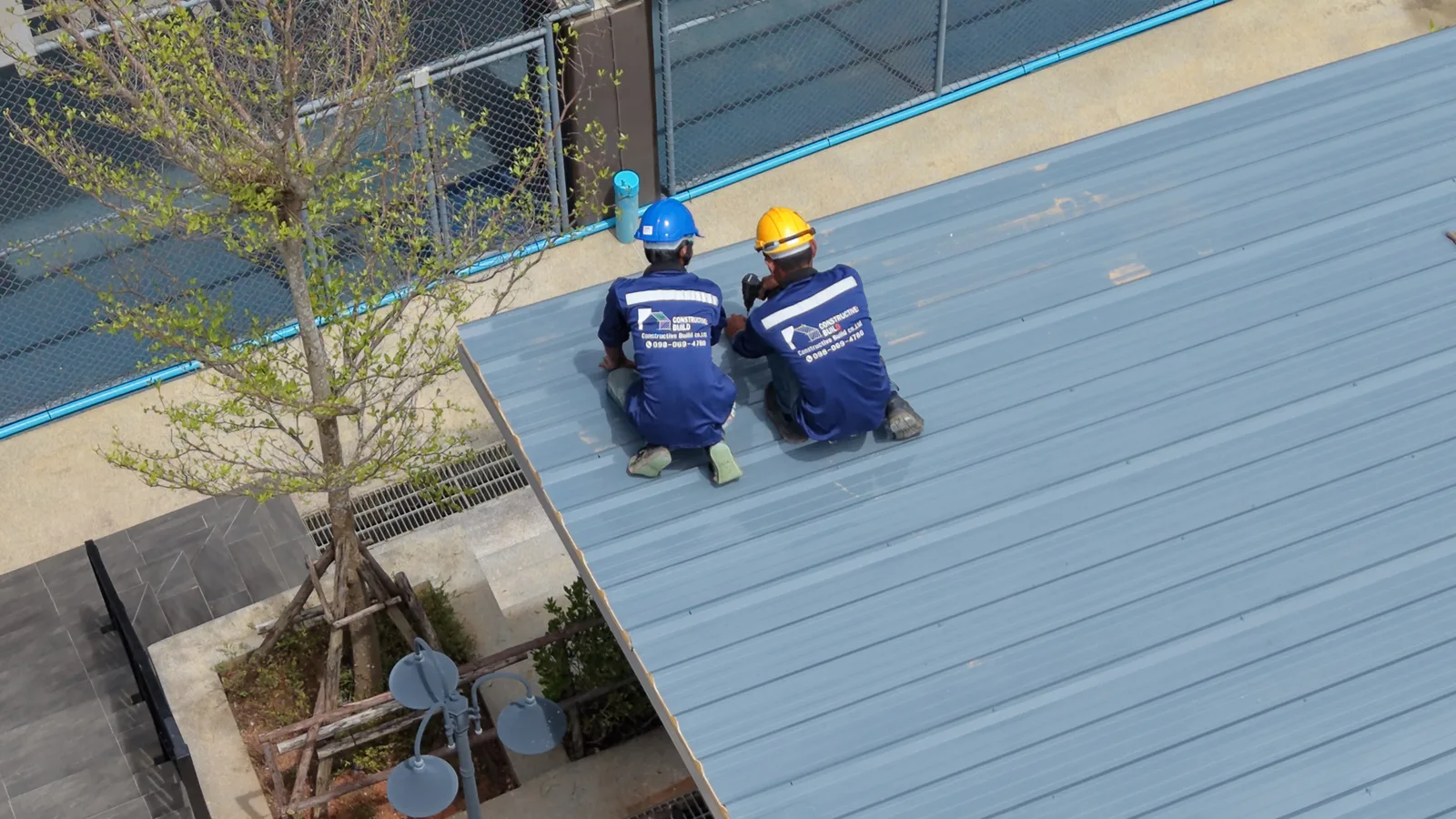
In-house architects, engineers, project managers and trades. The studio that inspects is the studio that would have built it correctly the first time.
We work to DIN, NZS and ISO construction standards on our own builds. We apply the same standards when we inspect other people's. This matters: a Phuket property inspection done to "looks finished" standards will pass things that an inspection done to engineering standards will flag. The pre-purchase report you bring to a price negotiation, or to a decision to walk away, is only useful if it tells you what is actually there.
The Phuket property market is genuinely international. We report in English by default, Thai on request for lawyer and contractor follow-up, Russian for the large Russian-speaking buyer base that has been a major part of the Phuket residential market for over a decade, and Mandarin for buyers and owners who need to share the report with stakeholders in mainland China or Hong Kong. The report is structured to be useful in three contexts: due diligence ahead of purchase, warranty follow-up with a developer, or instruction to a remediation contractor.
We don't run legal due diligence, title checks or planning verification ourselves. Those sit with your Thai property lawyer and we will work alongside them. We don't certify properties as "fit for sale" or "safe to occupy" the way some jurisdictions require, because no such certificate exists under Thai law. The deliverable is an engineering-grade condition report; how it is used is your call.
A typical pre-purchase inspection runs from initial brief to delivered report in around 7 working days. Diagnostic inspections sometimes need a second visit; we'll flag that in the scoping call.
Location, approximate size and use case (pre-purchase, post-handover, diagnostic). We'll confirm scope, turnaround and a fixed quote within 24 hours.
Request an inspection→