A typical Phuket build passes through five or six external offices before a single foundation is poured. The architect produces a concept. A separate firm engineers it. A project manager is hired to coordinate. A main contractor is appointed to build. A QS is brought in to certify. Subcontractors are tendered to deliver. Every line on that org chart is a handover, and every handover is a quiet renegotiation of the standard the project was drawn at.
Constructive: Build doesn't run that way. Architecture, engineering, project management and construction sit inside one studio, on one programme, against one budget. This article is the argument for why, and what specifically goes wrong when those four disciplines aren't aligned under one accountable team.
The handover problem
The fragmented model is structurally elegant on paper. Each firm specialises. Each firm bills against a clear scope. Each firm hands over a deliverable to the next firm. In practice, the handovers are where the standard slips.
The architect issues drawings that assume a level of construction quality. The engineer reviews them with a level of structural conservatism that adds cost. The project manager interprets both with a level of programme optimism that nobody on site agrees with. The contractor reads the lot through the lens of what trades they can mobilise this season. By the time the building exists, every assumption has been compromised by the next person down the chain, and nobody is accountable for the cumulative effect.
Every line on that org chart is a handover, and every handover is a quiet renegotiation of the standard the project was drawn at.
The fix isn't to make the handovers tighter. It's to remove the handovers. That's a different organisational design.
Why each of the four belongs in-house
Architecture
Design decisions that affect cost are made every day on a live build. A change to a wall location, a substitution of a material, a clash between a duct and a beam: each one is a decision that ought to involve the architect, but most external architects' contracts only allow for a quarterly review cycle. Decisions get made on site by people without the design context, and the building drifts from the drawing.
Keeping architecture in-house means the design intent is in the room when the decision is made. A junior on site can pick up the phone and have an architect on the same project review a substitution within the hour. The drawing wins more arguments.
Engineering
Structural and MEP coordination clashes happen in the model, not on the slab. An external engineer working from a drawing set produced six months earlier will spot half the clashes; the other half show up when the trades are physically there. Co-locating engineering with architecture means clashes are caught at coordination meetings, not at first-fix.
The savings here are substantial, typical Phuket projects spend 3–5% of their total construction cost on rework attributable to coordination errors. In-house engineering brings that figure down to under 1%.
Project management
Programme, cost, quality and safety reporting is a continuous discipline, not a quarterly visit. An external PM running multiple sites cannot keep the same standard of documentation as a PM whose entire week is spent on one project. The reporting gap shows up as surprises at the end of the month.
An in-house PM also has skin in the game on the construction side. They aren't optimising for their own engagement renewal, they're optimising for the project's handover. That changes the conversation about what gets escalated and when.
Construction
Trades that are accountable to the same plan deliver to the same plan. When the main contractor is a subsidiary or affiliate of the firm that designed the project, the trades on site are answering to a chain that ends in the same place. Quality on site reflects the same standard the architecture was held to in the studio.
The opposite, designers who never set foot on site, contractors who interpret the drawings to suit their crews, is the default in this market, and it's the default that produces the kind of finish that closes the wrong sales.
What this looks like on a real project
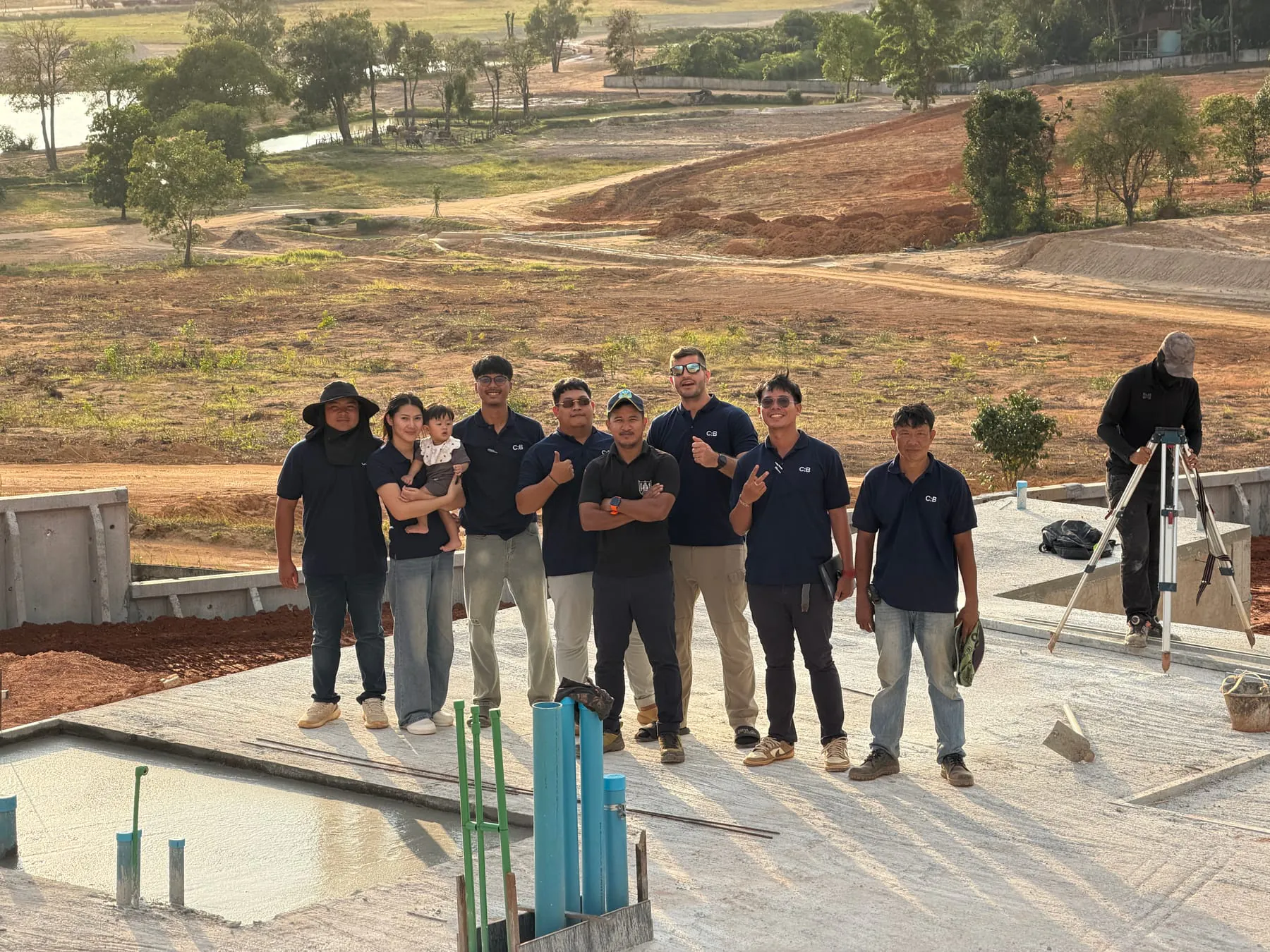
The clearest current example is at KAHLI Phuket. We took the project on after a previous contractor had run it substantially behind programme. The first thing we did was reissue the drawings from the architecture team's master set. The second thing we did was reopen the engineering review. The third thing we did was rebuild the production schedule against a single fixed timeline, one programme, owned by us, reported weekly to the principals.
Every component on the site is now coordinated through a single chain of accountability. The architect on the project is in the same studio as the engineer, who is in the same studio as the project manager, who is in the same studio as the construction lead. When a decision needs to be made, it gets made, not deferred to a steering committee whose members fly in twice a year.
The same approach applies on the SiamSportsPro Tennis Academy, on QAV Residences, and on every greenfield brief we accept. We don't take work where the client wants to fragment the disciplines back out, that engagement model and our delivery model don't line up.
What it isn't
This isn't an argument against specialist subcontractors. We use them constantly, for tiling, for joinery, for specialist trades like Laykold court surfacing or precast erection. The point isn't that everyone has to be on the C:B payroll. The point is that the four coordinating disciplines, architecture, engineering, PM, construction, have to answer to the same plan, in the same building, on the same week.
Subcontractors come and go. The plan stays.